Working with Aroehan has been an eye opener for me. Actually, it delivers shocks when I witness the activities.
Aroehan is an NGO. In 2005-06, 169 children below the age of six died in Mokhada due to malnutrition. That led to formation of AROEHAN. It is striving to bring sustainable changes to the tribal communities. I got associated with Aroehan over the last two years.
With Madhuri, Ganesh (who work for Aroehan) and Sulabha, my wife, I went to Kurlod. It is a village consisting of many ‘pada’ or hamlets. Our vehicle took us to Pethecha Pada. Madhuri said that we had to walk to Shedyacha Pada where she had arranged meetings with the villagers. (More about our discussion with the villagers in another blog).
Shedyacha Pada is about two Kms away from Pethecha Pada, but you must cross a river. Pinjal River.
Presently the river does not have much water so one can cross it easily, jumping over the rocks. Then you climb up a tiny hill to Jambhul Vadi. Shedyacha Pada is a little further away. In the monsoon, both these hamlets get cut off completely from Pethecha Pada, putting the villagers’ life at risk in many ways.
We finished our meetings with people at Shedyacha Pada. Sarita and Meenakshi from Aroehan had arranged all meetings. We were walking back to cross the river when two persons approached us at Jambhul Vadi. They had some discussion with Madhuri and Sarita. They looked worried.
Madhuri and Sarita in discussion with Patient’s relatives
“A person is very sick. He must be taken to Hospital immediately. They were asking if he can be taken in our vehicle.”
“What did you say?”
“Yes, I said. If somebody is critically ill, there is no choice.”
“How will they cross the river? Can the patient walk?”
“They will carry him in a hammock. They do it – I mean they have to do it often. Sad. There is no way out!”
We crossed the river. And walked a few steps when Madhuri looked back and said “Look, they are already on the way.”
I turned back. They were crossing the river. It had taken me good time to cross it, balancing my way on the rocks. They crossed it as if it was as smooth as a runway! They walked incredibly fast with a fifty-kilo patient cuddled in their hammock! And barefoot!!
Carrying Patient in a Hammock across Pinjal River
I reached for my mobile and shot the video.
“Where will they go?” I asked Madhuri.
“There is a hospital about twenty Kms away. Our vehicle will take him there and then it will return to pick us up.”
“What happens when the river is in spate during the monsoon?”
“HE decides if the patient must survive or die. No help is available.” She pointed finger to the sky.
“A PHC (Primary Health Centre) unit is sanctioned for us. Since 2014. But it has not come up.” A villager said.
“It will come up soon. We must not lose hope,” another said.
“Till then this river will decide the life and death issues” the villager said.
I was feeling relieved that our vehicle was available for the patient. That it was available was just a coincidence.
We walked our way to the Pada. No word uttered. Feeling helpless. And powerless.
आरोहनच्या कामाची माहिती करून घेणे ओघानेच आले, कारण आरोहनने विश्वस्त म्हणून त्यांच्या समितीत मला सामावून घेतले. जव्हार-मोखाडा हे आरोहनचे कार्यक्षेत्र. जव्हारला जायचं म्हणजे मनोरपुढे उजवीकडे निघणारा विक्रमगडचा रस्ता धरायचा. तिथून पुढे जव्हार. अंतर तसं फार नाहीये, पण रस्ता इतका खड्डेवाला की आपला उत्साह निम्माशिम्मा व्हावा. किंवा आपल्यापुढे काय वाढून ठेवलंय त्याची जाणीव करून देणारा. कारण खड्ड्यांनी बसणारे धक्के सौम्य म्हणावेत असे धक्के खेड्यातील परिस्थिती पाहता बसतात.
जव्हारला आरोहनचे कार्यालय आहे तिथलं काम उरकून धारेच्या पाड्याकडे निघालो. तुम्ही जर ‘धारेचा पाडा’ असा गुगलवर शोध घेतलात तर तुम्हाला काहीही माहिती मिळणार नाही. धारेचा पाडा साखरी ग्राम पंचायतीत मोडतो. इथली वस्ती तर आदिवासींचीच आणि ती ही अगदी थोडी. कोणी तरी म्हणाले की हजारहून अधिक नाहीये. मला तर वाटलं की तेव्हढीही नसावी.
“तिची स्कूटर दिसत्ये म्हणजे रेश्मा पोचली आहे; इथेच ‘माता-बैठक’ आहे.” माधुरी म्हणाली. गाडी थांबली. समोरच एक छोटं आणि बैठं घर होतं, आत गेल्यावर ध्यानात आलं की ते एक छोटं सभागृह होतं. म्हणजे एक खोलीच. केवळ ह्याच कारणासाठी बांधलेली! साधारण १८ बाय १८ ची. आत ‘माता-बैठक’ चालली होती. रेश्मा वीस-पंचवीस आदिवासी महिलांना माहिती देत होती. काही महिला त्यांची मुले घेऊन आल्या होत्या. मी, माधुरी व डॉ. शुभा त्यांच्यात सामील झालो. माधुरी विविध प्रोजेक्टवर देखरेख करते तर डॉ शुभा म्हणजे आरोहनच्या चीफ ऑपरेटिंग ऑफिसर.
मोखाड्यात १६९ बालकांचा कुपोषणामुळे मृत्यु झाल्याची बातमी २००६ साली आली तेव्हा अंजली कानिटकर व डॉ हेलन जोसेफ यांनी त्वरित ‘आरोहन’ची स्थापना केली ती जव्हार मोखाड्यात आदिवासींच्या पाड्यात जाऊन त्यांच्या स्वास्थ्यासाठी काम करायच्या उद्देशाने. (अनेक प्रश्नांचे पदर एकमेकात गुंतलेले असल्यामुळे केवळ ‘स्वास्थ्य’ किंवा ‘आरोग्य’ अश्या एकाच प्रश्नावर काम करून भागणार नव्हते, तर सर्वांगीण विकासावर लक्ष्य केंद्रित करावे लागणार होते, त्यामुळे कामाची दिशा नंतर बदलण्यात आली.)
“हे माता-बाल सुरक्षा कार्ड. नोंदणी झाल्यावर लगेच मिळते. ही तर गरोदरपणाची कुंडलीच आहे!” रेश्मा माता-बैठकीतल्या स्त्रियांना सांगत होती. “नोंदणीपासून डिलिवरी व लसीकरणापर्यंत सर्व माहिती त्यात असते.”
“हे तीन रंग बघा, हिरवा, पिवळा आणि लाल. काय वाटतं तुम्हाला? तुमचं बाळ ह्यापैकी कुठल्या रंगात असलं पाहिजे?”
“हिरव्या”
“फार छान. आपलं बाळ हिरव्या रंगात येण्यासाठी काय करावं लागेल?” रेश्माने रोख आता आहाराकडे वळवला. सुदृढ बालकाला आहार ‘तिरंगा’ – लाल रंगाचे टोमाटो, गाजर, पांढऱ्या रंगाचे दुध, भात, अंडी व हिरव्या भाज्या – असा तिरंगा आहार कसा द्यावा ते रेश्मा सांगू लागली. “तिरंगा आहार घ्यायला तुम्हाला लांब जायची जरूर नाही, हे सर्व घटक तुमच्या आजूबाजूला आहेतच.”
“इथे अजूनही अनेक बालकं अंडर-वेट असतात.” शुभा मला म्हणाली. “प्रश्न केवळ आहाराचाच नाही तर चुकीच्या समजुतींचा देखील आहे. आदिवासी समाजात अनेकदा गरोदर स्त्रिया पेज पिऊन राहतात. मग त्या ‘अॅनिमिक’ होतात. कसे आरोग्य राहिल त्यांचे; कशी वाढ होईल बाळाची?”
तुम्ही इंटरनेटवर शोधलं तर टाटा सामाजिक संशोधन संस्थेतील दोघांचा एक अभ्यासपूर्ण लेख सापडेल. ‘२००५ मध्ये केवळ पालघर जिल्ह्यातच ७१८ बालकांचा मृत्यू कुपोषणामुळे झाला. २०१६ मध्ये ६०० पेक्षा अधिक मुले दगावली.’ त्या दोघा संशोधकांनी ३७५ मुलांचा अभ्यास केला. त्यात ५९% मुलांची वाढ खुंटली असल्याचे निष्कर्ष त्यांनी काढले.
“इथे मुलींचे शिक्षण फार होत नाही. सातवीनंतर अनेकदा शिक्षण थांबतेच. मुलगी पंधरा सोळा वर्षांची झाली की तिचे लग्न होते. मग ती गरोदर राहते. हे सर्व मोठेच प्रश्न आहेत.”
“काल-परवांच पेपरात वाचलं की चौदा-पंधरा वर्षांची मुलगी आश्रम शाळेत गरोदर राहिली.”
“आश्रम-शाळेत मुले मुली एकत्र शिकतात, आणि तिथेच राहतात. तिथे मुलीने गरोदर होणे हे काही आश्चर्यकारक नाही. अनेकदा अश्या मुलींची लगेच लग्ने लावून दिली जातात. त्यांच्या समाजात तो फार मोठा विधी नसतो. मुलगी एक दिवशी मुलाच्या घरी जाते, बस्स!”
“इथे माता-बैठकीत ती मुलगी बघा. तिच्या हातात बाळ आहे. ती आई तर सोळा वर्षांची असेल-नसेल.”
“त्यांचंही कुपोषण होतं. अनेकदा अश्या मुली आपलं वय अठरा सांगतात. तरीही असं वाटतं की त्या लहान आहेत. लहान वयात माता होण्याचे अनेक दुष्परिणाम आहेत. केवळ सामाजिकच नव्हे तर शारीरिक देखील.”
रेश्मा महिलांशी त्यांच्या समस्यांबद्दल बोलू लागली. चतुराईने तिने चर्चा ग्रामसभेकडे वळवली आणि ‘महिला ग्रामसभेचे’ आयोजन करण्याचे महत्त्व पटवून दिले. पण मोठ्ठा अडसर तर महिलांनी आपल्या प्रश्नाबाबत बोलू लागण्याचा होता. रेश्मा महिलांचं मन वळविण्यात कांही प्रमाणात तरी यशस्वी ठरली, त्या बोलू लागल्या पाण्याच्या प्रश्नावर! “असे प्रश्न सोडवायलाच ग्रामसभा व पुढे ग्राम-पंचायत असते.”
महिलांनी सभेत बोलणे हा एक त्यांच्या मनातला मोठ्ठा अडसर आहे. तो पार करणे सोपे नक्कीच नाही.
आता रेश्माने चर्चेचा रोख स्थलांतराच्या समस्येकडे वळवला. आदिवासींच्या पाड्यात स्थलांतर ही एक प्रचंड मोठी समस्या आहे. केवळ शेतीवर जगता येत नाही, मग एक पीक काढले की शहराच्या दिशेने कूच!
“स्थलांतर अनेक रीतीने आयुष्य कुरतडते. कित्येक जण आपल्या वृद्ध माता-पित्यांना मागे सोडून जातात. मुलांच्या शिक्षणावर पाणी सोडावे लागते, आणि आरोग्याची आबाळ होते. संपूर्ण खेड्याच्या ‘इकोनोमी’वरच अपरिमित दुष्परिणाम होतोय.”
“आरोहनने शेतकऱ्यांना दुसरे पीक कसे घेण्यासाठी मार्ग दाखवले आहेत, मदत केली आहे. आज कित्येक शेतकरी तसे दुसरे पीक काढत आहेत.”
“काही विशिष्ट भागातील स्थलांतर पन्नास टक्के कमी करण्याचा मनसुबा आरोहनने ठेवला आहे, आणि ते देखील एक आवाक्याबाहेरचं उद्दिष्ट वाटतंय, यावरूनच कल्पना करा.”
मला आठवलं, रोटरीतर्फे आम्ही भिवंडीजवळ एक बंधारा बांधत होतो. मी बांधकाम चालू असताना तिथे गेलो तेव्हा तीन फुटाच्या काठ्या उभ्या करून कित्येक मजुरांनी संसार मांडला होता. “ते शेतीची कामं संपली की इथे कामासाठी येतात. होळीला परत आपल्या गांवी जातात,” बांधकाम कंत्राटदार मला सांगत होता. परतीच्या वाटेवर मी एका झाडाखाली स्थलांतरित कुटुंबाने थाटलेला संसार बघितला.
मी चालत्या गाडीतूनच फोटो काढला. माझ्यासारख्या शहरी वास्तव्य करणाऱ्यांना स्थलांतराचा प्रश्न किती मोठ्ठा आहे हे समजायला प्रत्यक्ष भिवंडी, मोखाडा अश्या भागात फिरायला हवे, आकडेवारी प्रश्नांची माहिती देते, पण त्याबाबत जाणीवा वाढवत नाही.
अत्यंत अस्वस्थ करणारी आणि गुंतागुंतीची परिस्थिती मी पहिली, आणि ती आपल्या समोर ठेवली आहे. कितीही काम केलं तरीही अपुरेच पडणार आहे. तरीही एकत्र येऊन ठोस पावलं उचलावीच लागतील. ते अपरिहार्यच आहे.
सरकार ही जगातली सर्वात अकार्यक्षम संस्था आहे यात वादच नाही. मग ते कोणत्याही पार्टीचे असो. अनेक कार्यक्रम पेपरवर आहेत, पण लाभार्थी त्यापासून वंचित आहेत हेच कटू सत्य आहे. आरोहनसारख्या संस्था कार्यरत आहेत हा दिलासा असला तरीही मुंबईपासून केवळ दीडशे किमीवर इतकी भयाण परिस्थिती असावी हा नेत्यांनी, व्यक्तींनी आणि समाजानेही कूपमंडूक वृत्ती ठेवल्याचा आणि आत्मकेंद्रित असल्याचा परिणाम आहे यात शंकाच नाही.
पालघर जिल्ह्यातील दुर्गम, आदिवासी पाड्यांतील शेतकरी व भूमिहीनांसाठी शेतीतील यांत्रिकीकरण महत्त्वाचे ठरले आहे. भातमळणी यंत्र, राईस मिल, तेलघाणी, आटा चक्की, भातकापणी आदी यंत्रे येथील महिला व पुरुष बचत गटांना देण्यात आली आहेत. त्यातून या गटांना अर्थार्जनाचा सक्षम पर्याय तयार झाला आहे. गावातच रोजगार तयार झाला आहे. परिसरातील लोकांनाही या यंत्रांचा लाभ गावातच घेणे शक्य झाले आहे.
पालघर जिल्ह्यातील दुर्गम, आदिवासी पाड्यांतील शेतकरी व भूमिहीनांसाठी शेतीतील यांत्रिकीकरण महत्त्वाचे ठरले आहे. भातमळणी यंत्र, राईस मिल, तेलघाणी, आटा चक्की, भातकापणी आदी यंत्रे येथील महिला व पुरुष बचत गटांना देण्यात आली आहेत. त्यातून या गटांना अर्थार्जनाचा सक्षम पर्याय तयार झाला आहे. गावातच रोजगार तयार झाला आहे. परिसरातील लोकांनाही या यंत्रांचा लाभ गावातच घेणे शक्य झाले आहे. पालघर हा आदिवासी बहुल जिल्हा असून यातील जव्हार, मोखाडा तालुके तुलनेने आर्थिक दृष्ट्य़ा अधिक मागासलेले आहेत. येथे वारली, कातकरी, ठाकूर, कोकणा आदी जमातींचे आदिवासी लोक राहतात. शेती हा त्यांचा मुख्य व्यवसाय असला तरी भात, नागली, वरई, करडई याशिवाय अन्य पिके फारशी घेतली जात नाहीत. याची कारणे म्हणजे हवामान, पर्जन्यमान, डोंगर उताराची जमीन आणि अनेक वर्षांपासून सुरू असलेली पारंपरिक शेती पद्धती. परंतु यापेक्षा महत्त्वाचे म्हणजे कमी शिक्षण आणि त्यासोबत नवीन तंत्रज्ञानाचा अभाव. सुधारीत तंत्रज्ञानाला चालना मुंबई येथील आरोहण ही स्वयंसेवी संस्था या भागात सुमारे १४ वर्षांपासून कार्यरत आहे. कुपोषण निर्मूलन हे संस्थेचे मुख्य उद्दिष्ट आहे. या व्यतिरिक्त जलसंधारण, शेतीपध्दती या क्षेत्रातही संस्था कोसबाड येथील कृषी विज्ञान केंद्राच्या साह्याने उपक्रम राबवत आहे. पिण्यासाठी स्वच्छ पाणी, आरोग्य सेवा, फळबाग, फूलशेतीतील उपक्रमांमधून आदिवासी गरीब शेतकऱ्यांची प्रगती करण्याचा संस्थेचा प्रयत्न आहे. अजूनही अनेक आदिवासी पाड्यांवर मूलभूत सुविधा नाहीत. भात मळणी, भात कांडून घेणे, धान्याचे पीठ तयार करणे, तेलाची घाणी आदी आवश्यक सुविधांसाठी जवळच्या शहरात किंवा जव्हार, मोखाडा आदी तालुक्यांच्या ठिकाणी येथील आदिवासी लोकांना जावे लागते. ही समस्या लक्षात घेऊन त्या त्या गावातील समस्या गावातच सोडविल्या गेल्या पाहिजेत यासाठी आरोहण संस्थेने पावले उचलली. केले यांत्रिकीकरण प्रशिक्षण व यंत्रांची निवड संस्थेने गावांचे सर्वेक्षण करून गरजू महिलांचे बचत गट तयार केले. त्यांना योग्य प्रशिक्षण दिले. भात मळणी यंत्र, भात गिरणी (राईस मिल), आटा चक्की व तेलाची घाणी आदी छोट्या यंत्रांची निवड केली. त्यातून तयार होणारे उत्पन्न त्या- त्या महिला बचत गटाला मिळेल असा उद्देश ठेवला. महिला सक्षमीकरण व बळकटीकरणाचा हा प्रयत्न होता.
यंत्रांचे वितरण
एकूण ३४ शेतकरी गटांना यंत्रांचे वितरण
पैकी सहा गटांना राईस मिल. हे यंत्र वरई व मसाला देखील कांडून देते. थोडक्यात ते ‘थ्री इन वन’ स्वरूपाचे आहे.
१४ महिला गटांना आटा चक्की (पल्व्हरायझर)
चार महिला बचत गटांना तेल घाणी
अलीकडे सहा शेतकरी गटांना भात कापणी यंत्रे (रीपर) देण्यात आली आहेत.
भात मळणी यंत्र: भात हे कोकणातील प्रमुख पीक आहे. मात्र सध्याच्या काळात निसर्गाच्या लहरीपणामुळे भात उत्पादकांचे अर्थकारण समाधानकारक नाही. वाढती मजुरी, मजुरांचा अभाव यातून उत्पादनात आणखीन घट येत आहे. उत्पादन खर्चही मोठ्या प्रमाणात वाढला आहे. पीक तयार झाल्यानंतर कापणी करून झोडणी करण्यासाठी वेगळा खर्च येतो. बऱ्याचवेळा मळणीसाठी मजुरांअभावी पीक खळ्यावर जास्त दिवस पडून राहते. यामध्ये मग उंदीर, घुशी तसेच मोकाट जनावरांपासून मोठे नुकसान होते. या सर्व समस्यांवर मात करण्यासाठी संस्थेच्या पुढाकाराने मोटरचलित भात मळणी यंत्र मोखाड्यातील शेतकरी गटांना देण्यात आले. त्याच्या वापराने शेतकऱ्यांच्या खर्चात घट झाली. मळणीपूर्वी होणारे नुकसान टळून उत्पादनात वाढ झाली. यंत्रामुळे झालेला फायदा (एक एकर भात कापणी-मळणीच्या अनुषंगाने) पारंपरिक पद्धतीत एका दिवसाची मजुरी, मजूरसंख्या, पेंढ्या बांधणी, वाहून आणणे असा खर्चाचा तपशील पाहता एकूण कापणी मळणी खर्च सुमारे ५२०० रुपये होतो. उत्पादन १० क्विंटल गृहीत धरले व दर २००० रुपये प्रति क्विंटल पकडला तरी २०,००० रुपये हाती येतात. त्यातून कापणी मळणीचा खर्च वजा जाता ही रक्कम १४,८०० रुपये होते. यंत्राचा वापर केल्याने एकूण कापणी मळणी खर्च ३६०० रुपयांपर्यंतच येतो. ही रक्कम वजा केल्यास शिल्लक रक्कम एकरी १६,४०० रुपये होते. वरील दोन्ही पद्धतींमध्ये बियाणे, पेरणी, लागवड खर्च, खते, मशागत, पीक संरक्षण आदी खर्च समान येत असला तरी मळणीची पद्धत बदलल्यामुळे खर्चात बचत करता येऊ शकते. शिवाय वेळेत काम होऊन नुकसान टाळता येते. मळणी यंत्र वापरल्याने झालेले फायदे
मजुरांच्या भरवशावर लांबणीवर जाणारी मळणी वेळेत करता आली.
कमी मजूर लागत असल्याने मजूर समस्येवर तोडगा
मळणीसाठी येणाऱ्या मजूर खर्चात बचत. घरातील व्यक्तींनीच भातमळणी उपलब्ध वेळेनुसार केली.
उंदीर, घुशी, जनावरे या उपद्रवी प्राण्यांपासून होणारे नुकसान टाळता आले.
यंत्र विद्युतचलीत असल्याने अन्य मेहनत नाहीय अर्ध्या हॉर्सपॉवरचा पंप असल्याने सिंगल फेजवर यंत्र चालवता येते.
यंत्राच्या साहाय्याने प्रति तासात ३०० किलो भाताची मळणी होते. दिवसाला ८ तास यंत्र चालवल्यास साधारणतः दोन ते अडीच टन भाताची मळणी करता येते.
यंत्राद्वारे दोन मजूर वापरून अधिक प्रमाणात मळणी करता येऊ शकते.
अल्प भूधारक शेतकरी आपल्या शेतातील मळणी उरकून अन्य शेतकऱ्यांकडे मळणी करून व्यवसाय करू शकतात.
कापणीच्या काळात अवकाळी पावसाची परिस्थिती निर्माण झाल्यास यंत्रामुळे एकाच दिवशी कापणी व मळणी करून होणारे संभाव्य नुकसान टाळता येते.
भातगिरणी (राईस मिल) मोखाडा हा आदिवासी दुर्गम भाग आहे. साहजिकच येथील गाववस्ती हरी भागापासून दूर आहे. दळणवळणाच्या पुरेशा सुविधा नसल्याने येथील लोकांना बराचसा वेळ तालुक्याच्या ठिकाणापर्यंत पोचण्यासाठी घालवावा लागतो. भातकाढणी झाल्यानंतर मळणीसाठी देखील तालुक्याच्या ठिकाणी असलेल्या मिलपर्यंत न्यावा लागतो. त्यासाठी स्थानिक वाहतूकदारांना शुल्क द्यावे लागते. अन्य भागांतून देखील मोठ्या प्रमाणात शेतकरी भात मळणीसाठी येतात. साहजिकच काहीवेळा शेतकऱ्यांना १ ते २ दिवस तालुक्याच्या ठिकाणी मुक्काम देखील करावा लागला आहे. अशा प्रकारे भात उत्पादनासोबत प्रक्रियेवरही मोठा खर्च येतो. हा खर्च व लागणारा वेळ कमी करण्यासाठी ग्रामपंचायत पातळीवर काही गटांना भातगिरणी व्यवसायासाठी प्रोत्साहन देण्यात आले. यासाठी अल्पभूधारक महिला गटांना निवडून त्यांना प्रशिक्षण देण्यात आले. गावात उपलब्ध वीजजोडणी, सुविधा यांचाही विचार करण्यात आला. परिस्थिती बदलली पूर्वी प्रति १० क्विंटल वाहतुकीसाठी हमालीसहित १७०० रु खर्च यायचा. आता गावातच सुविधा असल्याने वाहतुकीचा खर्च ३०० ते ४०० रुपयांपर्यंत येतो. गटाचे उत्पन्न म्हणायचे तर प्रति क्विंटल साधारणतः ४० किलो कोंडा मिळतो. प्रति १० क्विंटल कोंड्यापासून ४०० किलो कोंडा मिळतो. तो ७ ते ८ रु किलो या दराने पक्षीखाद्य विक्रेत्यांना विक्री केला जातो. प्रति १० क्विटंलमागे गटाला २८०० रुपये उत्पन्न मिळते.या सुविधाकेंद्रामुळे गावातील लोकांना तालुक्याच्या ठिकाणी जाण्याचा खर्च वाचवता आला. या गिरणीची क्षमता प्रति तास दीड ते २ क्विंटल आहे. भात गिरणीच्या जोडीला मसाला कांडपही होत असल्याने महिला गटाला मसाले तयार करून विक्री करता येणार आहे. तेलघाणा जव्हार, मोखाडा तालुक्यात मोठ्या प्रमाणात मोहाची झाडे आहेत. त्यापासून येथील लोकांना विविध स्वरूपात म्हणजे फुले, बिया, फळे, लाकूड आदी उत्पन्न मिळते. येथील आदिवासी लोकांच्या आहारात मोहाचे तेल मोठ्या प्रमाणात असते. मार्च- एप्रिल महिन्यात मोहाची फळे आणि बिया गोळा केल्या जातात. बिया सुकवून पावसाळ्याच्या प्रारंभी तेलघाण्यामधून तेल काढून आणले जाते. मोहासोबतच येथील शेतकरी खुरासणी या तेलवर्गीय पिकाचीही लागवड करतात. त्यापासूनही खाद्य तेल उपलब्ध होते. मात्र तेल काढण्यासाठी देखील तालुक्याची वाट पकडावी लागते. हे अंतर ३० ते ५० किलोमीटर पर्यंत असते. त्या ठिकाणी आल्यानंतर देखील तीन ते चार दिवस आपला क्रमांक लावून तेल काढणी शक्य होते. यामध्ये वेळ आणि खर्चही जास्त होतो. यंत्राने केले अल्पभूधारक महिलांचे अर्थार्जन संस्थेच्या माध्यमातून काही अल्पभूधारक महिलांना तेलकाढणी व्यवसायासाठी प्रोत्साहित करण्यात आले. त्यातून महिलांना चांगल्या अर्थार्जनाची तसेच परिसरातील लोकांचीही सोय झाली. तेल काढल्यानंतर शिल्लक राहणारा चोथा म्हणजेच पेंडीलाही बाजारात मोठी मागणी आहे. सुमारे १०० किलो मोहाच्या बियांपासून ४५ ते ५० किलो तेल तर ५० किलो पेंड मिळते. शेतकरी आणि व्यापारी सेंद्रिय खत म्हणून ती १२ ते १५ रुपये प्रति किलो दराप्रमाणे खरेदी करतात. मोहाचे तेल चवीला जरा कडवट असल्यामुळे शहरातील लोक ते आहारात पसंत करत नसतील. मात्र आदिवासी अनेक वर्षांपासून त्याचा वापर करीत आहेत. कदाचित त्यामुळे त्यांची प्रतिकारशक्ती चांगली असावी. लॉकडाऊन काळात मिळवले आर्थिक उत्पन्न कोरोना संकटात लॉकडाऊनच्या तीन महिन्यांच्या काळात जिल्ह्यातील विविध महिला बचत गटांनी यंत्रांच्या माध्यमातून आर्थिक उत्पन्न मिळवून कुटुंबाला चांगला आर्थिक आधार दिला. यात राईस मिलच्या माध्यमातून कन्याकुमारी महिला बचत गटाने सुमारे २४ हजार रुपये तर महालक्ष्मी गटाने १० हजार रुपयांचे उत्पन्न मिळवले. याच प्रकारे अन्य गटांनीही काही प्रमाणात उत्पन्न मिळवून संकटात आर्थिक आधार शोधण्याचा प्रयत्न केला.
संपर्क- उत्तम सहाणे- ७०२८९००२८९ गणेश सरोदे- ९९२३२७२००७
– उत्तम सहाणे
(लेखक कृषी विज्ञान केंद्र, कोसबाड हिल, ता डहाणू, जि पालघर येथे कार्यरत आहेत.)
Water is a basic necessity, but for some it is a priceless commodity!
Background:
The Mokhada block in Palghar district is witness to heavy rainfall during the monsoon months, but by the time the year comes to an end in December the water crisis steps in. The non-monsoon months force the villagers to migrate for 5-6 months to nearby brick kilns or companies in search of menial jobs. Water in all forms for domestic use, potable purposes and irrigation is out of reach for many.
A study on water availability conducted in 2018 by IIT CTARA and AROEHAN supported by Siemens India Ltd, revealed the villages with mild to severe water stress areas. This also led to the erection of over 196 water conservation structures like check dams, cordons, wells, ponds, sub-surface bunds and farm ponds in at least 13 Gram Panchayats of Mokhada alone. Lifting solutions made it feasible for water to be supplied to distant places thus reducing the hard work and time put in by women to fetch water for their daily needs. This is just the beginning, the road to completion is still distant.
The CORONA pandemic:
The Corona pandemic has added on to the already existing woes of the poor tribal farmers. Due to the country wide lockdown announced on the 23rdof March, all the activities including construction, even in the villages came to a standstill. If the water conservation structures were not ready by June, it would not be possible to retain rain water for the non-monsoon months.
The AROEHAN team decided to wait for some leeway during the lockdown and at the first opportunity in the end of April, decided to get permissions from the government authorities for transportation of construction material, allocation of resources in the form of local labour and also for travel of staff within the block limits. Once the permissions were granted, national directives for work places were put in place and people were asked to follow them stringently. The construction work started in full force in the selected villages of Mokhada by the team led by our Project Officer, Chetan Bhoir and supervised by Program Manager, Nitesh Mukne.
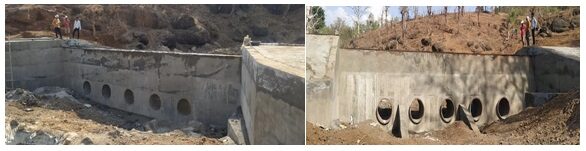
With funding support from Siemens India Ltd and the involvement of local labour and the team, we were able to put up 11 new structures[New check dams (5), New wells (6)]and refurbish 5 existing ones,[Refurbished wells (3), Refurbished ponds (2)]by the end of June. This will surely help solve the water stress in these villages and also reduce the thirst days leading to reduction in migration in the non-monsoon months. This also helped the villagers to earn income staying in their own villages during the pandemic.
The structures have a total storage capacity of3.15 cr litres, which will ensure water supply to11hamlets with695households and a population of4033beneficiaries.
ठाणे जिल्ह्यातील मोखाडा तालुक्यातील दुर्गम भागातील शेतकऱ्यांसाठी जलकुंडांची निर्मिती वरदान ठरली आहे.
या भागात कार्यरत आरोहण स्वयंसेवी संस्थेने ‘फळझाड वाडी तेथे जलकुंड’ ही संकल्पना येथे राबवली. कोसबाड कृषी विज्ञान केंद्राचे तांत्रिक मार्गदर्शन घेतले. ऑक्टोबरनंतर पाण्याचा शाश्वत स्रोत तयार होऊन शेतकऱ्यांसाठी बारमाही शेती करणे शक्य झाले आहे. रोजगारासाठीचे स्थलांतरही थांबले आहे. ठाणे जिल्ह्यातील मोखाडा, जव्हार या भागात पावसाळ्यात भरपूर पाऊस पडतो. परंतु जमिनीला असलेला तीव्र उतार, डोंगर-दऱ्या आणि खडकांमुळे पाणी साठवण न होता पाणी वाहून जाते. पावसाळ्याच्या चार महिन्यांनंतरची तीव्र पाणीटंचाई, त्यामुळे होणारी हंगामी शेती, रोजगार उपलब्ध नसणे यामुळे बरीच कुटुंबे ऑक्टोबरनंतर रोजगारासाठी स्थलांतर होतात. पाण्याचे स्रोत उपलब्ध असले तरी शेतापासून जास्त दूर आहेत. पाणी आणणे खर्चिकही आहे. परिणामी वर्षानुवर्षे काही जमिनी पडीकच राहिलेल्या दिसून येतात. फळबाग लागवडीला चालना आदिवासी बहुल भागातील बहुतांश कुटुंबे अल्पभूधारक आहेत. शेतीत नवे तंत्रज्ञान अवलंबण्याची त्यांची क्षमताही कमी आहे. मोखाडा तालुका आर्थिक गरिबी व कुपोषणाच्या अडचणींनी ग्रासला आहे. या सर्व बाबी लक्षात घेता आदिवासींच्या मदतीला आरोहण संस्था धावली. सन २००६ पासून जव्हार, मोखाडा, डहाणू, पालघर आदी भागांत संस्था शेती, जलसंधारण व पाणी व्यवस्थापन, आरोग्य, शिक्षण, आदी विषयात कार्य करते आहे. सन २०११ मध्ये संस्थेने बारमाही पाणीसाठा असलेल्या शेतकऱ्यांचे गट तयार केले. फळबाग, भाजीपाला, फूलशेती लागवडीला चालना दिली. त्यातून शेती हा बारमाही उपजीविकेचा शाश्वत स्रोत होऊ शकतो हे शेतकऱ्यांच्या लक्षात येऊ लागले. प्रयोगशील शेतकऱ्यांकडे अभ्यास सहलींचे आयोजन करण्यात आले. जलसंधारणावर भर मोखाडा दुर्गम तालुका असल्याने शेतमाल १०० किलोमीटरपेक्षा जास्त अंतरावरील बाजारपेठेत विक्रीस नेण्यात अनेक अडचणी होत्या. या समस्येवर उपाय शोधण्यासाठी गटशेतीचा आधार घेण्यात आला. अर्थात पाणी ही मुख्य समस्या होतीच. बऱ्याच गावांमध्ये वर्षातील अर्धा काळ पिण्यासाठी टॅंकरद्वारे पाणी पुरवठा होतो. अशा परिस्थितीत दुबार शेती करणे आव्हानाचे होते. यासाठी अभ्यास करून काही गावांमध्ये छोटे बंधारे बांधण्यात आले. बारमाही नद्या किंवा तलाव असलेल्या ठिकाणी सौरपंपाच्या माध्यमातून पाणी आणण्यात आले. जलकुंडांची निर्मिती अजूनही डोंगर-टेकडीवर जमीन असलेले मोठ्या संख्येने आदिवासी शेतकरी बाकी होते. त्याचबरोबर ओसाड-पडीक जमीन लागवडीखाली आणण्यासाठी संस्थेने वाडी लागवड कार्यक्रमात वर्षभर पुरेल इतका पाणीसाठा तयार करण्याकडे लक्ष दिले. कोकणातील जांभ्या जमिनीत निचऱ्याचे प्रमाण जास्त असते. त्यामुळे फळझाडांचे पाणी व्यवस्थापन करणे अवघड जाते. कोरडवाहू फळझाडांना सुरुवातीच्या तीन वर्षांत सिंचनाची गरज असते. यासाठी ‘फळझाड वाडी तेथे जलकुंड’ ही भूमिका संस्थेने घेतली.
पाण्याचा ताळेबंद
सुमारे अर्धा एकर क्षेत्रावर ७० पर्यंत झाडांच्या लागवडीचे नियोजन करून त्या क्षेत्रात सहा बाय पाच बाय एक मीटर आकाराचे जलकुंड बनवले.
पावसाळ्यानंतर पुढील आठ महिने त्यातून पाणी पुरवठा होईल असा विचार करून आकारमान निश्चित
पावसाळ्यानंतर प्रति रोपासाठी आठवड्याला १० लिटर या प्रमाणात ७० रोपांना आठ महिन्यांसाठी एकूण २५ हजार लिटर एवढ्या पाणीसाठ्याची आवश्यकता होती.
बाष्पीभवनाचा विचार करता साधारणतः ३० हजार लिटर साठवण होईल असाही विचार केला.
मोकाट जनावरांपासून भविष्यात रोपांचे संरक्षण व्हावे यासाठी लागवड क्षेत्राला चारही बाजूने सागरगोटा या काटेरी वनस्पतीची लागवड
सुमारे २५० शेतकऱ्यांकडे अशा पद्धतीने लागवडीचे नियोजन
लागवडीचे ५ बाय ५ मीटर अंतर निश्चित. आंबा १०, काजू १५, लिंबू ५, जांभूळ ५, पेरू ५, आवळा ५, साग ५, पपई ५, शेवगा ५, बांबू १० असे नियोजन.
जलकुंडाचे फायदे
ऑक्टोबरनंतर जवळपास पाणीस्रोत उपलब्ध नसल्याने दरवर्षी मार्चअखेर ५० टक्क्यांपर्यंत होणारी रोपांची मरतुक यंदा मात्र २५ टक्क्यांपर्यंतच जाणवली. त्यातही बरीचशी मरतुक अतिपावसामुळे झाली होती.
पूर्वी शेतकरी दूर अंतरावरून पाणी वाहून आणायचे. त्यावेळी आठवड्याला जास्तीत जास्त पाच लिटर प्रति रोपाप्रमाणे पाणी दिले जायचे. नोव्हेंबरपर्यंत शेतीकामे पूर्ण झाल्यानंतर पाणी देण्यास डिसेंबरनंतर सुरुवात होत असे. या ताणामुळे रोपांची वाढ योग्य होत नसे. मागील वर्षी जलकुडांमुळे पाऊस उघडल्यानंतर ऑक्टोबरपासून आठवड्यातून दोनवेळा पाणी देणे शक्य झाले. त्यामुळे रोपांची वाढ चांगली झाली.
केव्हीकेचे मार्गदर्शन शेतकऱ्यांना कृषी विज्ञान केंद्र, कोसबाड येथील तज्ज्ञांकडून वेळोवेळी प्रशिक्षण. यात रोपांना आधार देणे, कीड-रोग, खते, पाणी व्यवस्थापन आदींचा समावेश. झालेले सर्वेक्षण
जलकुंड साठवण क्षमता
फेब्रु-मार्चमधील साठा लिटरमध्ये
जलकुंड संख्या
३० हजार लिटर
१०, ००० च्या आत
३५
१०,००० ते १४,०००
६५
१५,००० ते २०,०००
६०
२०,००० ते २५,०००
९०
मार्च ते मे या तीन महिन्यात रोपे जगवण्यासाठी १० हजार लिटर पाण्याची आवश्यकता
अनेक शेतकऱ्यांकडे योग्य नियोजनामुळे चांगला पाणीसाठा उपलब्ध झाला.
जलकुंडाच्या माध्यमातून शाश्वत पाणी स्रोत मिळाल्याने शेतकरी फळबागांसोबत मोगरा, भाजीपाला पिके घेऊ लागले.
आदिवासींचे शहराकडे होणारे स्थलांतर कमी झाले.
संपर्क- उत्तम सहाणे-७०२८९००२८९ (लेखक कृषी विज्ञान केंद्र, कोसबाड येथे विषय विशेषज्ज्ञ आहेत.)
Dr Helen Joseph was Professor at the College of Social Work, Nirmala Niketan (affiliated to the University of Mumbai) since 1983. Throughout her academic and professional career, she was been actively involved in issues related to communal harmony, domestic violence, ethics in social work practice and Peace Education. She was the Founder-Director of Salokha – A Field Action Project of the CSW, Nirmala Niketan on building communal harmony. We interviewed her on various issues:
Vivek’s World (VW): You are a founder-trustee and Chairperson of Aroehan (NGO). Tell us about the journey of Aroehan.Looking back, what are your thoughts about the achievements of Aroehan?
Dr Helen Joseph (HJ): I am reminded of the day (in 2005) when Dr. Abhay Bang gave a lecture at the College of Social Work on the plight of malnourished children in Maharashtra. This left some of us with a terrible sense of discomfort; and made us ask ourselves what more our profession ought to do to remain relevant and more responsive to the plight of the disadvantaged in India. As field work coordinator at that time, I made a small presentation at our weekly faculty meeting in this regard, proposing that we practically demonstrate the relevance of our teaching by taking up a limited area, working there, and showing the impact of our intervention. An opportunity arose when in 2006 the Govt. Of Maharashtra wanted us to take up some villages in Mokhada to work on the issue of Malnutrition. Accordingly AROEHAN was born. Anjali Kanitkar took responsibility to steer the project as Director, and I was part of the advisory team.
Starting with a micro-planning exercise we quickly realised the multiplicity and inter-connectedness of various factors that contributed to the high malnutrition deaths in the region. Hence we realised the need for an integrated approach that intervened simultaneously in areas ofHealth, Education, Agriculture, Livelihood and Good Governance.
Starting with a small team, led by a social work graduate from our own College, we began an arduous learning process in a difficult and hilly terrain lacking transportation facilities, no electricity, and where the villagers survived through subsistence farming and migration to the cities. As we educated ourselves, we stumbled, we fell, we rose, we discussed and debated on intervention strategies, our partnership with the government and the industry, what our ideology should be, what we should compromise on and what we should not etc.
Funds were difficult to access initially, though after CSR came into existence in 2013, the situation improved significantly. Today, we work in Mokhada, Jawhar, Dahanu and Palghar talukas of Palghar district. In 2014 we graduated from being a field action project of the College to an independently registered organization.
Health:We started with a maternal and child health program and Life Skills education among women and girls, but moved on towards empowering them to participate in Village Health & Sanitation Committees (VHNSC) which monitors nutrition and community health. We were instrumental in getting Ultrasound machines in 3 rural hospitals in Palghar district with the help of Siemens and DHLF.
Water scarcity is a major problem
Waterconservation has been a major achievement for AROEHAN. We have so far constructed 196 small and medium sized check dams, sub-surface bunds, and cordons, repaired and refurbished several defunct wells, and made new ones. This has helped not only in mitigating the water issues of the villagers, but even more importantly it has helped in recharging the ground water table across 13 GPs over the time we have been there. This has also relieved the women of the drudgery of carrying water from far off places, and made the conditions suitable for farmers to grow crops during the rabi season, thereby enhancing their livelihood. Thus intervention in a strategic area has had multiple impacts. Today more than 1000 small farmers have moved beyond rain-fed primitive agriculture to using modern techniques of farming to augment their yield. Besides cultivating grains and millets, they have also started growing vegetables, fruits and flowers.
Educationfor Life is what AROEHAN is working towards, which involves capacity building to make children and youth responsible and proactive citizens of tomorrow. The youngsters take up environmental projects, participate in school governance issues etc. The Jigyaasa project makes the teaching of Science, Technology, English and Mathematics (STEM) more interesting to students – allowing them to explore with their hands the concepts that many children find very difficult to grasp. Through this project, AROEHAN has so far reached out to 7575 students in 10 Ashram schools of Mokhada block.
In the critical area ofGovernance,villagers are empowered with knowledge to proactively engage with local self-government bodies to claim their entitlements and influence their village development.This was done by forming ‘pada samitis’ (sub-village neighbourhood communities) which then learn how to engage with the Gram Sabhas, a statutory body, where their representations can be made. As a result, the villagers now work closely with the statutory committees like the VHNSC, the committees formed under PESA (Panchayat Extension to Scheduled Areas), and on issues concerning their forest rights, employment issues (under MGNREGA) and other aspects of the Village Development Plan. Working on Governance is the corner stone of our work, as AROEHAN believes that at the end of 4 to 5 years, people should be able to work independently. Only then can our work be sustainable.
VW: What do you think Aroehan should do now to bring about substantial change? And what are the plans ahead?
Dr Helen Joseph (HJ): In general, I think we are on the right track. However NOW,we need to establish evidence of our impact on the ground, by setting up some measurable targets that demonstrate this.
Dr Helen Joseph, Chairperson, Aroehan
We have therefore selected a few villages where we will focus our attention on achieving the following strategic goals: (i) To achieve Zero Malnutrition deaths in the selected villages, (ii) To ensure that ALL school-going children are in schools, (iii) To reduce migration by 50% in these areas, and (iv) To establish a citizen’s forum with special emphasis on participation of women.
Secondly, it seems to me that the CORONA pandemic has brought into sharp focus a number of issues that are ailing the public health care system. I believe that there is need for AROEHAN to play an active role in assessing/identifying gaps in the system and advocating for a more robust public health care system especially in rural Maharashtra.
But in all this, people themselves need to lead the change; otherwise no work is sustainable. For this, people must believe in themselves, believe that they can aspire for a better life, and also believe that they are responsible not just for themselves but for their entire village. When we can do that, we can withdraw from the area -for which we must have an exit strategy in place.
Gram Sabha
Furthermore, personally, I believe that there is a non-tangible aspect on which we need to bring about substantial impact. Our work needs to go hand in hand with ensuring that a strong value base is developed in our children/youth (and village communities) – values of an inclusive society where there is respect and concern for all, irrespective of gender, caste, religion, race, language, community etc., accompanied by concern for the environment. I say this because I have realised that when disadvantaged people start becoming upwardly mobile, there is a danger that a ‘me-first’ attitude could develop, that takes no responsibility for those others who are still disadvantaged and discriminated against, even in their own neighbourhoods and beyond.
VW: Tell us about the issues facing the NGOs today.
Dr Helen Joseph (HJ): Some of the challenges faced by NGOs are:
Funding: This is a major challenge that many NGOs face. The Corona pandemic has resulted in a lot of CSR funds being diverted to it. This I fear will definitely affect our funding and thereby our work.
Professionalism in work,and having a well trained staff committed to the vision of the organization, are things that most NGOs are looking for. But this combination is difficult to find. For instance, there could be individuals who have a fire in their bellies and are devoted to the vision of their organization, but who are not necessarily good at management functions, or at following legal and other compliances, or vice versa. This is a big challenge.
Retaining one’s value system, and yet skilfully handling the political and sometimes selfish interests that inevitably come into play whenever change is being brought about, is again another significant challenge for all civil society organisations today, especially those that would like to focus on people-centred governance.
Thanks Dr Helen for sharing your thoughts with us.
Dr Shubalakshmi Iyer, Chief Operating Officer of Aroehan was instrumental in preparing a five year Strategic Plan. Two (out of five) objectives are: “Reduction in migration by 50% and No child out-of-school by 2025.” These are Aroehan’s (what Jim Collins called) ‘BHAG – Big, Hairy, Audacious Goals’. This is what most successful organisations set: Ambitious Long-Term Goals. Bill Gates said, “Most people overestimate what they can do in one year and underestimate what they can do in 10 years.” Aroehan has taken first step with a five year strategic plan.Dr Shubalakshmi answers our questions.
Vivek’s World (VW): Migration of labour is a humongous problem. Tell us the situation and what can be done to curtail migration.
Dr Shubalakshmi (Dr S): The context: The migrant communities in Palghar mainly belong to the Particularly Vulnerable Tribal Groups (PVTGs) viz. Katkaris. They are either marginal farmers or landless working as farm labour in other’s farms or wage labours in brick kilns or nearby companies. Usually migration in these areas takes place in the non-monsoon months from November to March. They come back to celebrate Holi, only to migrate for another 3 months of April to June, till when the monsoon begins. Most of our tribal population fall prey to this vicious cycle.
Dr Shubalakshmi Iyer, COO, Aroehan
The COVID crisis: This year due to the COVID crisis in the country the worst hit were the seasonal migrant labour who could not earn their wages as all forms of employment came to a standstill due to the lock down. They were left with no money or even basic necessities. This has affected not only the individuals, but their families and the community at large.
But as we say “Every cloud has a silver lining.” AROEHAN has been working in the Mokhada block since many years with the objective of reducing seasonal migration through water conservation and allied agriculture and alternate livelihoods.
Alternate livelihoods: We have started a pilot project with support from Siemens India Ltd. in 28 hamlets of Mokhada block to initiate alternate livelihoods for the marginal Self Help Groups. Some SHGs of landless and migrant farmers were identified and livelihood equipment like rice mill, papad making machine, oil crusher, and flour and masala mill have been provided to them. The members have been trained to operate the same. 50% of the SHGs have an earning potential between 5000 – 15000 rupees through regular and optimal utilization of the rice mill and the flour mill. This has also helped the neighbouring villagers in reducing their time and cost of travel and engaging in other forms of activity.
Non-monsoon agriculture: Some farmers were also encouraged to take up Rabi cropping in the non-monsoon months. An interaction with the farmers, gave an insight into their cropping pattern. They usually prefer paddy cropping during the monsoons and buy other condiments like chilly, onions and vegetables for their regular use at high prices. This is when the team, felt that multi cropping with training on good agricultural practices esp. during the non-monsoon months will help the farmers with an additional source of income and reduce migration in the long run. Leafy vegetables, fruit vegetables, gourds, roots and tubers, groundnuts and sunflower were selected as crops to be grown on 10 gunthas of land each. The farmers could earn an income of around Rs10-15K with the sale of produce in the local markets. This not only helped the community but also the nutrition requirement of their own families. This income generation activity prohibited them from migrating elsewhere in search of work. They were spared from the harshness of the corona pandemic in way of lack of money and essentials and could lead a better daily life in comparison to the other migrants.
The working conditions of Migrant Labour are appalling (Photo Vivek Patwardhan) Copyright
What can work? Empowering people with alternate livelihood opportunities and multi-cropping or generating income from agriculture enables communities to stay in their local villages and not venture out in search of menial wage employment during such pandemic or crisis situations. Availing government employment schemes through MNREGA for village development activities in one’s place of residence will also help people to generate income and thus curtail migration.
VW: Aroehan wants to ensure that in the next five years all children will attend school, there will be no child ‘out-of-school’. That’s a very ambitious goal. Tell us please, what was the situation on the education front pre-Covid and what is it now?
Dr S: The context: For a child to drop out of school or remain irregular, the reasons are manifold. Most of the schools in the tribal areas have very poor infrastructure and lack of WASH facilities as per norms. The nearest secondary school is distant from their residence. Caring for the younger sibling or migrating for work along with parents is other areas of concern. Even though students are enrolled in the schools, they usually drop out or are irregular due to lack of child friendly infrastructure and other reasons mentioned above, not to exclude the student – teacher ratio gap and lack of child friendly learning practices and pedagogy.
Education remains a neglected area in villages
Usually the children attend the school by chance or force, rarely by choice. The other attraction for the family is the food that is served at the school, not to talk of its nutritional value but surely helps decrease the burden on the family especially the woman to feed another mouth.
The COVID crisis: This year due to the CORONA pandemic, the schools were the first ones to lockdown in the beginning of March to contain the spread of the virus- a loss of almost 2.5 months of learning and exams esp. 10th and 12th Std. and also an anticipated decline in the already poor nutritional status of the children.
Education and Nutrition: Timely meals are provided to the children in the Ashram schools and the mid-day meal at the Zilla Parishad schools. The question lies to whether the children have the same access to food facilities at home where their parents are busy at work and cannot manage to make both ends meet with their meagre incomes and lack of food security.
The children have been promoted to the next class on the basis of their annual performance. With children at home, lack of educational facilities at the school due to the closure and also at the home front, it has become very difficult for the parents to monitor the child’s activities. The parents usually tend to feel that the sole responsibility of the child’s upbringing lies with the school.
The government authorities and the schools have made every effort to bring in various learning platforms through NGOs and other sources in the villages so that the children are not idle. Not everyone is familiar to digital and visual learning methods including the teachers in the rural and tribal areas. Online education is fine in the cities and semi-urban areas, but with the absence or limited availability of electricity and internet access and lack of awareness or education among the caretakers, this still becomes a distant dream for the students residing in far to reach tribal hamlets.
A few solutions to this problem could be setting up a central community kitchen to cater to the needs of children of all age groups, setting up of child friendly schools with improved infrastructure and educational facilities, an educational hub or a safe drop-in centre for continued learning and overall development of a child.
Getting familiar with their projects became essential as I was invited to join Aroehan as a trustee. Aroehan works in the Jawhar – Mokhada area of Dist Palghar (in Maharashtra). Take Ahmedabad Highway, travel up to Manor and then turn right to take a road leading to Vikramgad. The road has more potholes than the lunar craters. Perhaps it is a warning sign; the traveller must get ready to receive more severe shocks; I am referring to the living conditions in villages and of villagers.
We finished our work at the Jawhar Office and started for ‘Dharecha Pada’. Pada means a hamlet. A few Padas or hamlets dispersed over a large area makes a village in these scarcely populated hilly terrains of Mokhada. I guessed the population of Dharecha Pada may be less than a thousand. Dr Shuba, Madhuri and I reached Dharecha pada.
“I think she is already inside, I see her two-wheeler” Madhuri said, “A Mata-Baithak is organised here.” ‘Mata Baithak’ is a meeting of women. We alighted from our car in front of a small building. It was a small room, about 18’x18’in size, and it was obvious that the room was made for meetings. Mata Baithak was in progress. About twenty or twenty-five women made the audience, some carried children in their arms. Dr Shuba, Aroehan’s Chief Operating Officer, Madhuri, who supervises a few projects and I joined the meeting. Somebody hurriedly put three chairs for us. Reshma who works with Aroehan, was conducting the meeting.
In Mokhada 169 infants died due to malnutrition in 2006. Anjali Kanitkar and Dr Helen Joseph, moved quickly to establish Aroehan. ‘Aroehan’ is actually an acronym of ‘Action Related to Organisation of Education, Health and Nutrition’ and it is registered as NGO. The initial focus was on malnutrition eradication or health. However, they realised that the multiplicity and inter-contentedness of various factors that contribute to high malnutrition deaths required an integrated approach to the problem resolution.
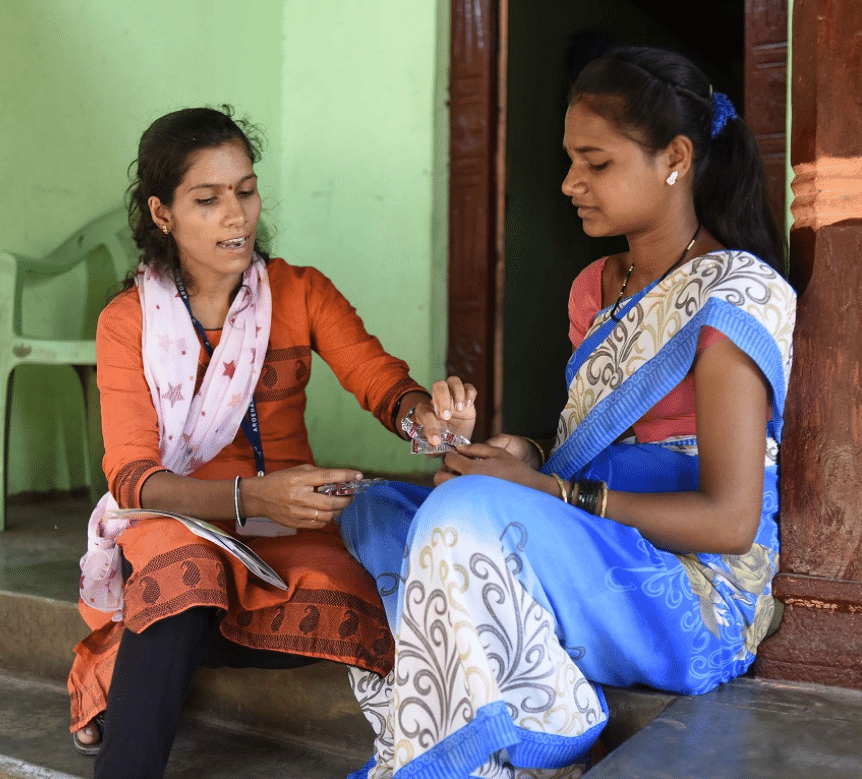
“This is Mata-Baal Suraksha Card (Health Card of Mother and Child). This is an ‘encyclopaedia’ of pregnancy.” Smile on everybody’s face! Reshma was explaining to the Adivasi (Tribal) women. “It contains all information about a pregnant woman’s registration, delivery and inoculation of the infant.”
Reshma holds Mata-Baithak
“Look at these three colours or three zones.” Reshma was held open the Health Card, and pointed to a diagram. “Three zones – Green, Yellow and Red. Ideally, in which zone your child should be?”
“Green”, a woman replied.
“Good. What needs to be done to make sure that the child is in green zone?” She introduced healthy diet. She was explaining how they should provide ‘Tiranga’ or tri-coloured diet. Tiranga is easily understood because that’s what the national flag is called; it has three colours saffron, white and green. Saffron colour included tomatoes, carrots, white included milk, eggs and rice and green included leafy vegetables. “You don’t have to travel outside your village, all the ingredients of tri-colour diet are available here.”
Note:I was later informed that following is the correct information: “The food tricolour depicts the following food groups: Saffron:Body building foods which include all the pulses(dals), meat, eggs and milk – protein sources. White:Energy giving foods which include all the grains, roots and tubers, oilseeds, ghee, milk products, sugar – carbohydrates and fat sources Green:Protective foods which include all the leafy vegetables, fruits and fruit vegetables, jaggery, iodised salt, spices – vitamin and mineral sources. TheAshok Chakradepicts water.”
Dr Shuba turned to me. “Several infants are born as under-weight babies in this Mokhada area. Wrong diet is a problem, but the wrong beliefs and practices about a pregnant woman’s diet is a greater problem. Many tribal women survive only on ‘pej.’ Pej is the water in which rice is boiled. Their diet becomes woefully inadequate. How can the pregnant woman remain healthy and will it not affect the development of the baby? Most of the pregnant women become anaemic, their haemoglobin drops to abysmally low levels.”
Mata Baithak in progress
Internet throws up a study of two researchers from Tata Institute of Social Sciences on malnutrition in Mokhada. ‘In 2005, child malnutrition claimed as many as 718 lives in one single district namely Palghar. Even after a decade of double-digit economic growth, in 2016, more than 600 children died due to under-nutrition in the same district.’ ….. ‘Our study level estimates suggest that 59% of children were stunted.’
“Education of girls usually stops at 7th Class. A 15 or 16-year-old girl is often married in tribal villages. This is quite common. Then she gets pregnant at an age she should not. These are big problems to overcome.”
“I read recently that a fourteen-year-old girl got pregnant in an ‘Ashram School.’
A story in ‘Firstpost’ mentions, ‘In November last year, (2016) the whole state of Maharashtra woke up to a horror — a tribal school in Buldhana was derecognised after reports emerged that girl students are being sexually assaulted there. The incidence only came to light after a girl, who was visiting her parents, complained of stomach-ache and was later found to be pregnant. As the episode unfolded, several other girls came forward complaining of sexual harassment, and at least three of them were pregnant. Eleven people were arrested, including school trustees, the headmaster and a few teachers.
“Ashram Schools provide hostels facility, boys and girls stay there. So, it is not a surprise that a young girl got pregnant. Such cases are not infrequent. They get them married – there is hardly any ceremony – sometimes she moves to the boy’s home, that’s it. Poverty! In a rare case there is a problem if the boy disowns her.”
“Take a look at some women in this meeting (Mata-Baithak). The one with a child in her arms looks under-age. She may be just about sixteen.”
“The are also under-nourished. If you ask them, girls will tell you that they are eighteen years old, but I feel that may not be correct age. There are many bad consequences of an under-age mother – not only at physical but also social level.”
Young Mothers At the Mata-Baithak
Reshma was now discussing the problems faced by women in the pada or hamlet. She spoke about ‘Gram-Sabha’ (Villagers’ Body). ‘People use the forum of the Gram Sabha to discuss local governance and development, and make need-based plans for the village. The Panchayat implements development programs under the overarching mandate, supervision and monitoring of the Gram Sabha. All decisions of the Panchayat are taken through the Gram Sabha and no decision is official and valid without the consent of the Gram Sabha.’
Reshma was persuading all women to organise a Mahila (Women’s) Gram Sabha. The women spoke about the problem of drinking water. Incidentally Mokhada region has a very high rainfall, but the villagers face scarcity of drinking water from march to July.
“You must organise Mahila Gram Sabha to voice your problems. Those will then be raised before Gram Panchayat effectively.” Although Reshma’s words made some impact, the real problem was that tribal women would not speak up in a large gathering. And that was, and remains, a big hurdle to cross.
Reshma turned to the issue of migration of villagers. For the tribal villages this is a huge problem. They can’t survive only on one-crop-agriculture, so they move to cities or towns in search of jobs.
“Migration eats into your life in many ways. Migrating men and women leave behind their aged parents who are left to fend for themselves. Children leave their school. They stay under harsh conditions during the migration period, affecting their health adversely. The entire economy of the village suffers.”
“We have helped farmers produce second crop. Several farmers have been harvesting second crop.”
“Aroehan has decided to take immediate measures to reduce migration of people by 50% in certain area. And that target appears to be almost unsurmountable – you can imagine the magnitude of this problem of migration.”
I was leading my Rotary Club’s project to build two check dams near Bhiwandi. I went to inspect the work when I noticed that a few families of labourers had set up a shade – well, you can’t call it home or even dwelling place – by erecting three feet high sticks and placing a torn saree over it. They were staying under it!
“They come down (climbing down the hills) here in search of a job, and return to their villages for the Holi Festival” the construction supervisor who had engaged those migratory labourers informed me. I was shocked. On my way I noticed a family camping under a tree; once you think of migration, you start spotting those who have migrated.
Migrating tribal families live under horrible conditions
I clicked this photograph. If you wish to grasp the humongous scale of migration, you should travel in Mokhada area. Statistics can provide you information, but sensitization to a problem is the result of seeing migration; statistics fails to sensitise us.
This is a very complex situation. It is multi-dimensional. Any amount of work and support will fall short of eradicating, transforming the situation; that’s my initial assessment. We require long term solutions and some immediate short-term measures, and, of course, a group of committed persons.
There should be no doubt that the Government is the most ineffective organisation, be it of any party. There are many programs and measures which are designed to ameliorate the conditions, but no benefit reaches the people who should be the real beneficiaries. It is heartening that NGOs like Aroehan are seized of the problem.
This horrible situation of poverty, malnutrition, migration, unhealthy practices and low literacy level has undoubtedly resulted from short-sightedness of leaders as well as their preoccupation with their own welfare. Can this be disputed?
“गाडी थांबवा” माधुरीने शरदला म्हणजे ड्रायव्हरला फर्मावले. माधुरी, प्रतिभा आणि मी आरोहनच्या जव्हार कार्यालयातून खैरमाळला जायला निघालो होतो. शरदने गाडी शंभर-दोनशे फूटही चालवली नसेल तेव्हां माधुरीचा प्रश्न आला.
“सर, तुम्ही टोपी आणली आहे ना?”
“नाही, काही तशी जरूर नाही.”
“ऊन फार कडक आहे, टोपी घेतलीच पाहिजे. गाडी थांबवा.”
गाडी हमरस्त्यावरच्या एका जनरल स्टोअर समोर उभी राहिली. मी टोपी विकत घेतली. पुन्हा गाडीत बसलो, आणि खैरमाळला निघालो.
माधुरी आणि प्रतिभा ‘आरोहन’ एनजीओमध्ये काम करतात. आरोहन हा शब्द म्हणजे इंग्रजी नावाचं संक्षिप्त स्वरूप आहे, म्हणून ते आरोहण नव्हे तर आरोहन. मला नुकतंच आरोहनने त्यांच्या विश्वस्त पदावर नेमलं आहे, त्यामुळे त्यांच्या कामाची ओळख करून घेणं ओघानेच आलं. मी सर्वप्रथम खैरमाळचा प्रकल्प बघावा असे ठरलं.
शरदने गाडी हमरस्त्यावरून डावीकडे वळवली. “खैरमाळ उंच डोंगरावर वसलंय. फक्त दहा घरांचं गाव आहे.” प्रतिभा म्हणाली.
“किती दूर आहे?”
“पंधरा किलोमीटरच आहे जव्हारपासून. पण रस्ता डोंगरातून जातो, आणि रस्ता बनवण्याचं काम चालू आहे. त्यामुळे वेळ लागतो.”
थोड्याच वेळात आम्ही “काम चालू – रस्ता बंद” च्या जागी पोचलो. रस्त्याच्या एका भागाचं डांबरीकरण चालू होतं. त्यांच्या सुपरवायझरने गाडी थांबवली. “तुला आता सोडतो, पण परतताना दुसऱ्या वाटेने जा” म्हणाला.
गाडी घाट उतरत होती. ऊन रणरणते होते. गुरंदेखिल झाडाखाली सावलीला उभी होती.
वळणावळणाच्या रस्त्याने आम्ही एक दोन पाडे मागे टाकत गेलो. नदीवर एक पूल लागला.
“हा पूल नुकताच बांधलाय. पावसाळ्यात ही नदी भरून वाहत असे तेव्हां खैरमाळचा जगाशी संपर्क तुटत असे.” माधुरी म्हणाली. “पूल बांधल्यामुळे मोठ्ठीच सोय झालीय.”
आमची गाडी गीटीपाडा गांवात आली. विटांची घरं, प्लास्टर न केलेली, दुतर्फा होती. गाडीतून उतरलो व चालू लागलो. एक छोटी तीन फुटी भिंत दिसली, त्यावर तीन नळ होते.
“हे आरोहननेच बांधले. बंधाऱ्यामुळे ह्या गांवापर्यंत नळ आणता आले.”
चार तरुण मुले जवळच होती. ती उठून उभी राहिली. मी नीट निरखून बघितलं. त्यांनी पिवळे हायलाईटकरून क्रिकेटरसारखे स्टाईलने कापले होते. अनेक आदिवासी घरांवर डिश आंटेना उभ्या होत्या.
माधुरी आणि प्रतिभा झपझप चालू लागल्या. मी त्यांच्या मागे. माझ्या लक्षात आले की आम्ही एका टेकडीवर होतो, आणि आता दरीत उतरायचे होते. प्रतिभा पुढे गेली. वहिवाटीचा रस्ता सोडून पायवाटेने खाली गेली. माधुरी माझ्यापुढे पण माझ्यावर सतत लक्ष ठेवत, कधी उतारावर मला हात देत नीट पुढे नेत होती. ऊन खरंच भाजून काढत होतं, त्या दोघींनी डोक्यावरून पदर आणि ओढणी घेतली होती. त्यांनी मला टोपी का घ्यायला लावली ते समजलं.
“आम्ही इथे बंधारा बांधलाय. खूप अडचणी आल्या, वेळ लागला, पण आम्ही काम पुरं केलं. वनखात्याच्या लोकांनीही आरोहनचं काम वाखाणलं.” प्रतिभा म्हणाली.
मी सांभाळूनच टेकडी उतरत होतो. जसे खाली आलो तसा दूरवर बंधारा दिसू लागला. नदीच्या पात्रात मोठ्ठे दगड होते. त्यातून वाट काढत पुढे बंधाऱ्याकडे निघालो.
बंधारा आठ फूट उंच आहे आणि पाणी जायला व्हेंट आहे. बंधाऱ्याच्या खालच्या बाजूस गोल झाकणे दिसत होती. तीच व्हेंट.
“पावसाळ्यात खूप पाणी येत. व्हेंट उघडली की बंधाऱ्यातला गाळ-कचरा बाहेर जातो. सप्टेंबरला व्हेंट बंद करतो, मग पाणी इथेच, बंधाऱ्यामागे, तलावासारखं थांबतं.”
नदी ओलांडून आम्ही बंधाऱ्याच्या डाव्या बाजूला गेलो. एक सुंदर डोह तयार झाला होता. बरंच खोल असावं.
“पाणी फुटभर देखिल कमी झालं नाहीये.” माधुरी आनंदाने ओरडलीच. “एप्रिलचा महिना आहे. जूनपर्यंत पाणी टिकेल वाटतंय.”
“हा बंधारा नव्हता तेव्हा खैरमाळच्या लोकांना पाणी आणायला दोन तीन किलोमीटर चालावं लागत होतं. तुम्ही नदीवरच पूल बघितला ना? तिथपर्यंत दोन घडे घेऊन बायका पाण्याला जात होत्या.”
“सर, खैरमाळ ह्या डोंगरावर आहे.” प्रतिभाने मागच्या उंच टेकडीकडे बोट दाखवलं. म्हणजे आम्ही एक टेकडी उतरलो, नदीचं कोरडं पात्र पार केलं, आणि आता नदीच्या दुसऱ्याबाजूला असलेल्या उंच टेकडीवर खैरमाळला जायचं होतं.
खैरमाळच्या बायका दोन घडे घेऊन खैरमाळची उंच टेकडी उतरून, मग दुसरी चढून पलीकडच्या नदीपर्यंत पाण्यासाठी जात असत, आणि परतत. हंड्यातलं किती पाणी सांडलं असेल आणि डोळ्यातलं किती सांडलं त्याची कल्पनाच केलेली बरी.
आम्ही तिथेच बंधाऱ्यावर उभे राहिलो. तलावातल्या वनस्पतीकडे माझे लक्ष गेले. हिरवळीचे चेंडू एकत्र करावेत तशी दिसत होती.
“त्या वनस्पतीला ‘गोंडूळ’ म्हणतात. त्याने पाणी गार राहातं.” माधुरीने माहिती पुरवली. मला वाटतं की गोन्ड्यासारखी वाढ दिसते म्हणून गोंडूळ नांव पडलं असेल.
आम्ही खैरमाळची टेकडी चढायला लागलो. माधुरी आणि प्रतिभाने कमीत कमी त्रासाची वाट कोणती ते नक्की केलं. टेकडी उंच तर आहेच, पण रुळलेल्या पायवाटा दिसत नव्हत्या.
“आम्ही प्रकल्पाच्या कामासाठी इथे अनेकदा आलो. इथे पावसाळ्यात खूप साप निघतात. फार भीती वाटायची. एक हातात काठी घेऊन पुढे आणि आम्ही सगळे तिच्या मागे रांगेने अशी वरात निघायची.” प्रतिभा म्हणाली. “आपण जाताना सोलार पॅनेल बघूया. आम्हीच बसवलेत ते. सोलारवर चालणारा पंप आम्ही बसवलाय. गावात पाच हजार लिटरची टाकी उंचावर उभारली आहे. पम्पामुळे खैरमाळला पाणी मिळते. आणि गीटीपाड्यालाही.”
“नळाने पाणी आलं तेव्हां खैरमाळमधल्या मुलांना फारच आप्रूप वाटलं. त्यांनी नळातून पाणी येताना कधी बघितलंच नव्हतं. ती सारखी नळावर जात, नळ उघडून बघत.” माधुरी सांगू लागली. “पाणी नव्हतं म्हणून मुलांना आंघोळही कधीमधीच. मग आरोग्याचे प्रश्न उभे! इथे मुलांच्यात खरुज असण्याचे प्रमाण खूपच होतं. आता दररोज आंघोळ करतात. आम्ही खरुजेवर लावायला औषधे आणली. खरुज गेली सगळ्यांची.
अर्धी-पाऊण टेकडी चढून गेलो होतो. आरोहनची सोलार पॅनेल दिसत होती. पंतप्रधान मोदींनी सर्व खेड्यांना वीज देण्याची घोषणा केली होती. खैरमाळ हे एक वीज [आणि इतर अनेक] सुविधा नसलेलं वंचित खेडं होतं. वीज तिथे महिन्या दोन महिन्यापूर्वीच आली. पण महाराष्ट्रात अनेक खेड्यांना चोवीस तास वीज मिळत नाही. इथे ‘कनेक्टीव्हीटी’चा कायमचा अभाव. इथे अजूनही मोबाईल नेटवर्क नाही. पावसाळ्यात खैरमाळशी संबंध असा तुटत असे की जसं हे खेडं भारतात नाहीये.
सोलार पॅनेलपासून गावापर्यंत चढ असला तरी वाट बरी आहे. आम्ही पुढे गेलो.
“ती वीटभट्टी बघा.” प्रतिभाने दूरवरची भट्टी दाखवली. “इथल्या लोकांना विटा आणण्यापेक्षा इथेच बनवणं सोयीचं वाटतं.” विटा व्यवस्थित रचल्या होत्या, बाजूलाच लाकडं गोळा करून ठेवली होती. भट्टी लावायची तयारी झाली होती.
“इथले गांवकरी एकच पीक घेत होते. नाचणी किंवा वरीचं. आता पाणी मिळतंय बंधाऱ्याचं. ते दोन तीन पिकं घेतात.” माधुरी सांगत होती. “पूर्वी पावसाळ्यानंतर, म्हणजे पीक तयार झाल्यावर, दसऱ्याच्या सुमारास इथले शेतकरी कामाच्या शोधात इतर जागी जात. स्थलांतरित कामगार! पडेल ती कामं शहरात वा इतर ठिकाणी करायचे. आता स्थलांतर बंद! पाण्याच्या उपलब्धतेने किती चमत्कार घडवलाय. तीन पिकं घेणारे शहरात काम शोधायला कशाला जातील?”
आम्ही खैरमाळमध्ये दाखल झालो. पहिल्या घरापाशी मुले खेळत होती. फोटो काढतो म्हणालो तर त्यांची आई हसून काही बोलली. त्यांची वारली भाषा. मला काहीच कळलं नाही, माधुरीने खुलासा केला. ‘मुलं तयार होऊन, चांगले कपडे घालून येतील.’
खैरमाळमध्ये दहा-आकारच घरं असली तरी ती मोठी आहेत. एका घराजवळ आरोहनने पाण्याची टाकी बांधली आहे. खालीच तीन नळ बसवून मोरी केली आहे. दोन मुलं हात-पाय धूत होती. “ती बघा फोटोसाठी तयार होत आहेत.” माधुरी म्हणाली.
एका घरासमोर मोठं आंगण होतं, तिथे आम्ही जमलो. घराच्या तुळईवर ‘ग्रामसभा-खैरमाळ’ अशी पाटी होती. आरोहनने शासनाची आंगणवाडी योजना इथे आणली. ‘अमृताहार’ ग्रामस्थ स्त्रियांना मिळवून दिला. बाई गरोदर असली तर तिला तिसऱ्या महिन्यापासून अमृताहार देण्यात येतो. कुपोषणाची समस्या त्यामुळे दूर होते.
गांवातली बायका-मुलं आमच्या अवतीभवती गोळा झाली. मी त्यांना बंधाऱ्यामुळे काय फायदे झाले ते विचारले. त्या सगळ्याजणी भरभरून बोलल्या, काबाडकष्टाचे जीवन मागे पडले होतं. मी ते व्हिडीओवर टिपलं.
माझं लक्ष घराच्या प्रवेशद्वाराकडे गेलं. व्हरांड्यासारख्या जागेत चक्क इंग्रजी तक्ते होते. “इथला एक मुलगा डीएड झालाय. तोच शिकवतो.” प्रतिभा म्हणाली.
आत्ता कुठे वीज आलीय, पाणी मिळालंय, बायकांना दोन-चार किलोमीटर पाण्याचे हंडे घेऊन टेकडी चढाउतरायला लागत नाहीये, आंगणवाडी आली, गावात सुईण पोहोचू शकते, अमृताहार मिळतोय, कुपोषणाकडे ग्रामसभा लक्ष देतेय, आयुष्यात सुविधा आणि व्यवस्थितपणा आलाय.
हे सर्व व्हायला स्वातंत्र्यानंतर सत्तराहून अधिक वर्षे लागली. त्याबद्दल सरकारी यंत्रणेला दोष द्यायचा, त्यांच्यावर ठपका ठेवायचा, की आरोहनसारख्या एन्जिओकडे आशेने बघायचं?
तुम्हीच ठरवा.



 Madhuri and Sarita in discussion with Patient’s relatives
 Carrying Patient in a Hammock across Pinjal River